
Impacted Canine Treatment in Seoul with 3D CBCT Planning
Quick answer
An impacted canine is a canine tooth, usually upper, that stays trapped in the bone or gum instead of erupting, often with a baby canine still in place. Treatment usually involves exposing the tooth surgically and guiding it into the arch with braces. At Isu Yonsei Baro Orthodontics, Dr. Sally Chaekyung Lee locates it precisely with CBCT before planning.
What an impacted canine is
Upper canines have the longest path of eruption of any tooth. Sometimes they veer off course and become stuck in the palate (palatal impaction) or toward the lip side (buccal impaction). The baby canine may remain in place well into the teens or adulthood. An impacted canine is different from a high canine or snaggletooth, which has erupted but in the wrong spot.
Common causes
- Lack of space in the arch
- Small or missing upper lateral incisors, which normally help guide the canine
- A retained baby canine
- Genetic tendency; palatal impaction can run in families
- An abnormal tooth germ position or, less often, a cyst or extra tooth
Why it matters
An impacted canine can press on the roots of the neighboring incisors and, in some cases, cause root resorption without symptoms. A retained baby canine usually has a short root and may eventually be lost, leaving a gap. Canines also play an important role in guiding jaw movements and in the appearance of the smile.
How it is diagnosed
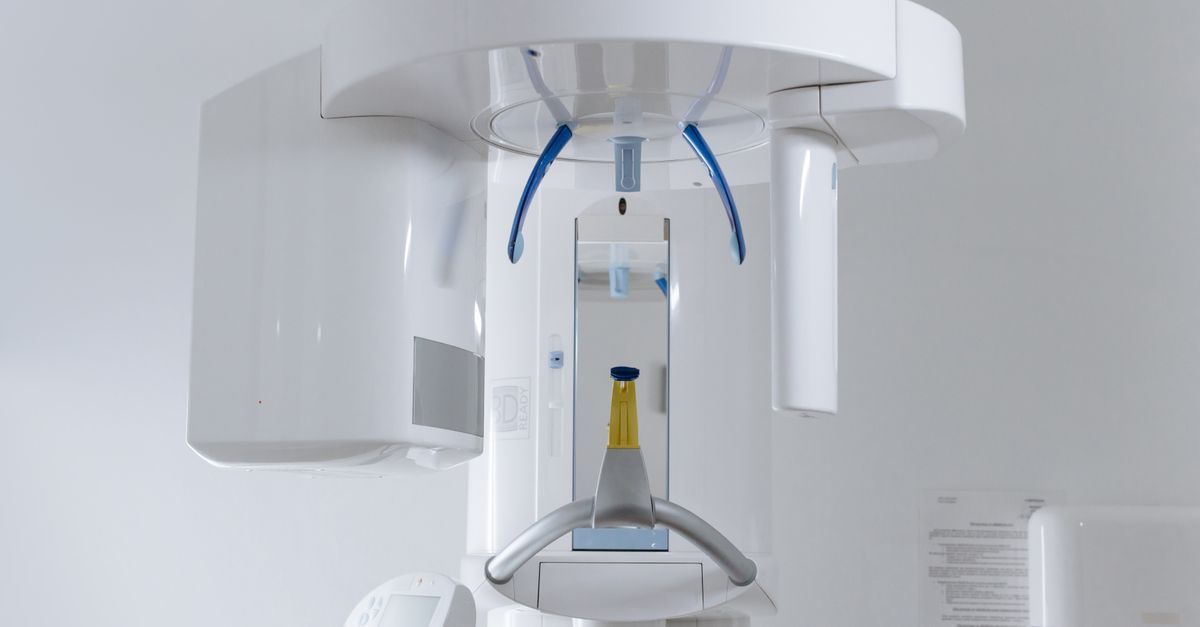
Standard X-rays can suggest an impaction, but a RAY Quantum 5D CT (CBCT) scan shows the canine's exact three-dimensional position, its angle, its distance from the bite plane and whether adjacent incisor roots show resorption. This information shapes whether the tooth can be guided in, the direction of force and the surgical approach. Intraoral digital scans measure available space, and photos and the RAY Face 3D facial scan document the smile.
Treatment options
- Early interception: in some children around ages 10–12, removing the baby canine or creating space may help the permanent canine improve its path. Monitoring is part of early orthodontics.
- Exposure and guided eruption: an oral surgeon uncovers the tooth and bonds a small attachment; orthodontic forces with braces or ceramic braces then bring it into the arch.
- Aligners: may be used in selected phases, though braces are usually preferred for the guided eruption itself.
- Alternatives: if the canine is fused to bone or poorly positioned, removal and space management may be discussed; see missing teeth and space.
Typical timeline
Guiding an impacted canine into place usually takes longer than routine treatment, commonly roughly 18–30 months overall. Adults may experience slower movement. Individual results and side effects vary; treatment is decided after examination.
What to expect at Isu Yonsei Baro
The first visit takes about 60 minutes, including CBCT, digital scans and photos. Dr. Lee explains in English where the canine is, whether it is likely to be recoverable and how the surgical and orthodontic steps would be coordinated. In Dr. Lee's practice, the CBCT is reviewed in three dimensions to plan a force direction that moves the canine away from neighboring incisor roots. You receive a written estimate before deciding.
At a glance
- Clinical term: impacted maxillary canine, palatal or buccal
- Common warning sign: a baby canine still present after about age 13
- CBCT shows the exact position and whether neighboring roots are affected
- Treatment usually combines orthodontics with a minor exposure procedure by a surgeon
- Typical comprehensive treatment: roughly 18–30 months (not a promise)
Your orthodontist
Dr. Sally Chaekyung Lee, DDS, PhD
- MOHW-certified orthodontic specialist
- PhD in Orthodontics, Yonsei University; Severance Hospital residency
- Member, Edward H. Angle Society of Orthodontists
- 2026 AJO-DO peer reviewer
- Consults in fluent English and treats you herself, start to finish
Isu Station Exit 2 · 1-minute walk
Mon & Thu until 9 PM · Sat 9 AM–2 PM
+82 2-592-2080
Frequently asked questions
Can an impacted canine come in on its own?
In some children, removing the baby canine or creating space around ages 10 to 12 allows the permanent canine to improve its path and erupt. Success depends on the canine's angle and position. In teens and adults, spontaneous eruption is less likely and guided eruption with orthodontics is usually needed.
Is the exposure surgery for an impacted canine painful?
Exposure is usually done under local anesthesia by an oral surgeon, and most people feel pressure rather than pain during the procedure. Some soreness and swelling for a few days afterward is common and typically managed with medication. Experiences vary, and details are explained before scheduling.
What age is too late to bring down an impacted canine?
Adults can often have impacted canines guided into place, but the chance of success tends to decline with age, and the tooth may move more slowly. Some canines become fused to the bone and cannot move. A CBCT scan helps estimate whether recovery is realistic.
What happens if an impacted canine is left alone?
Some impacted canines remain stable without causing problems, but others can damage neighboring incisor roots or develop a cyst. The baby canine may eventually be lost. Regular X-ray monitoring is advised if treatment is not chosen, so that changes can be detected early.
Related reading
This page is general information, not a diagnosis. Individual results and side effects vary; treatment is decided after an in-person examination. See our editorial and medical review policy .
Talk to Dr. Lee in English
Send your concern and preferred dates. You'll get an examination, your options, a timeline and a written estimate before you decide anything.